


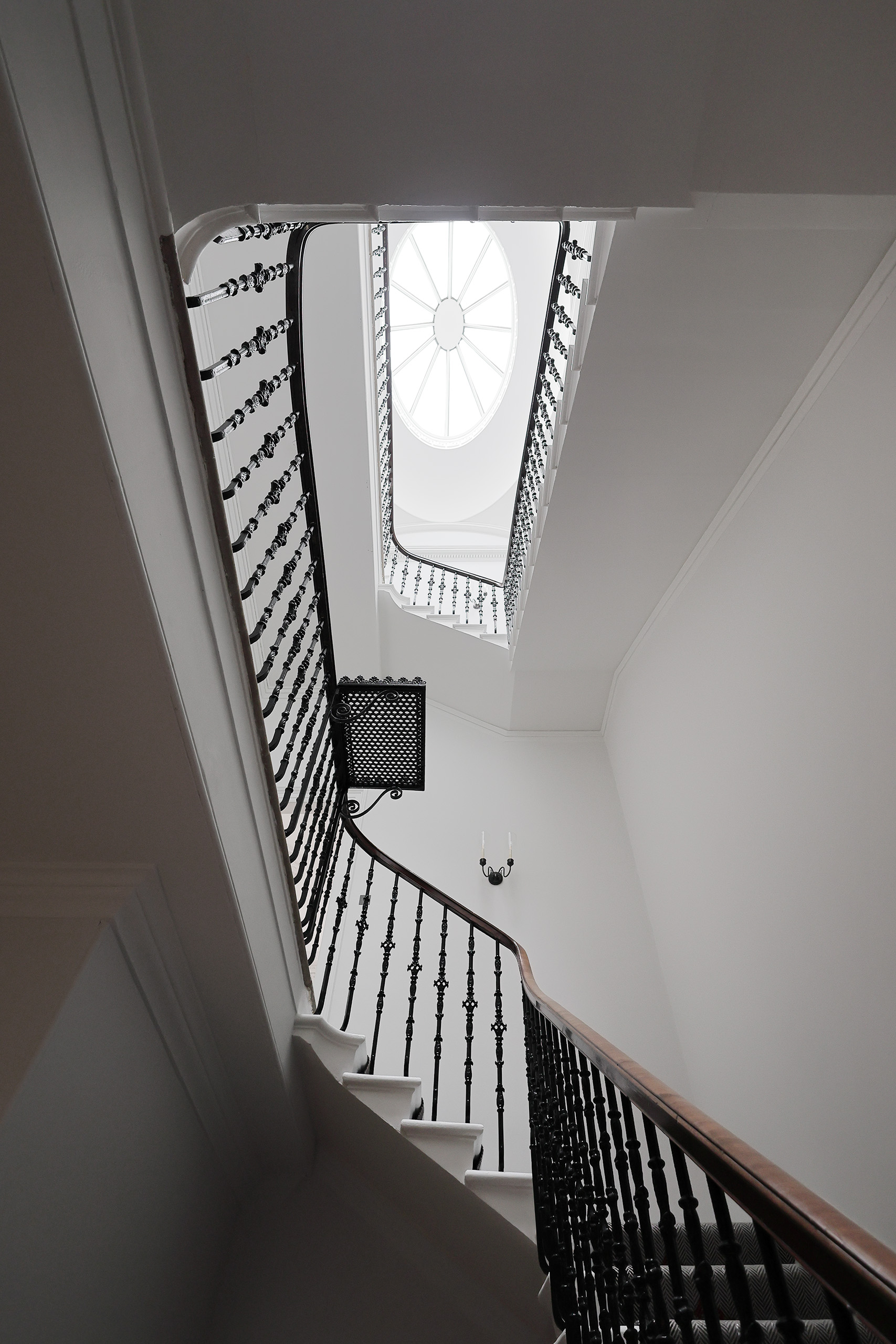
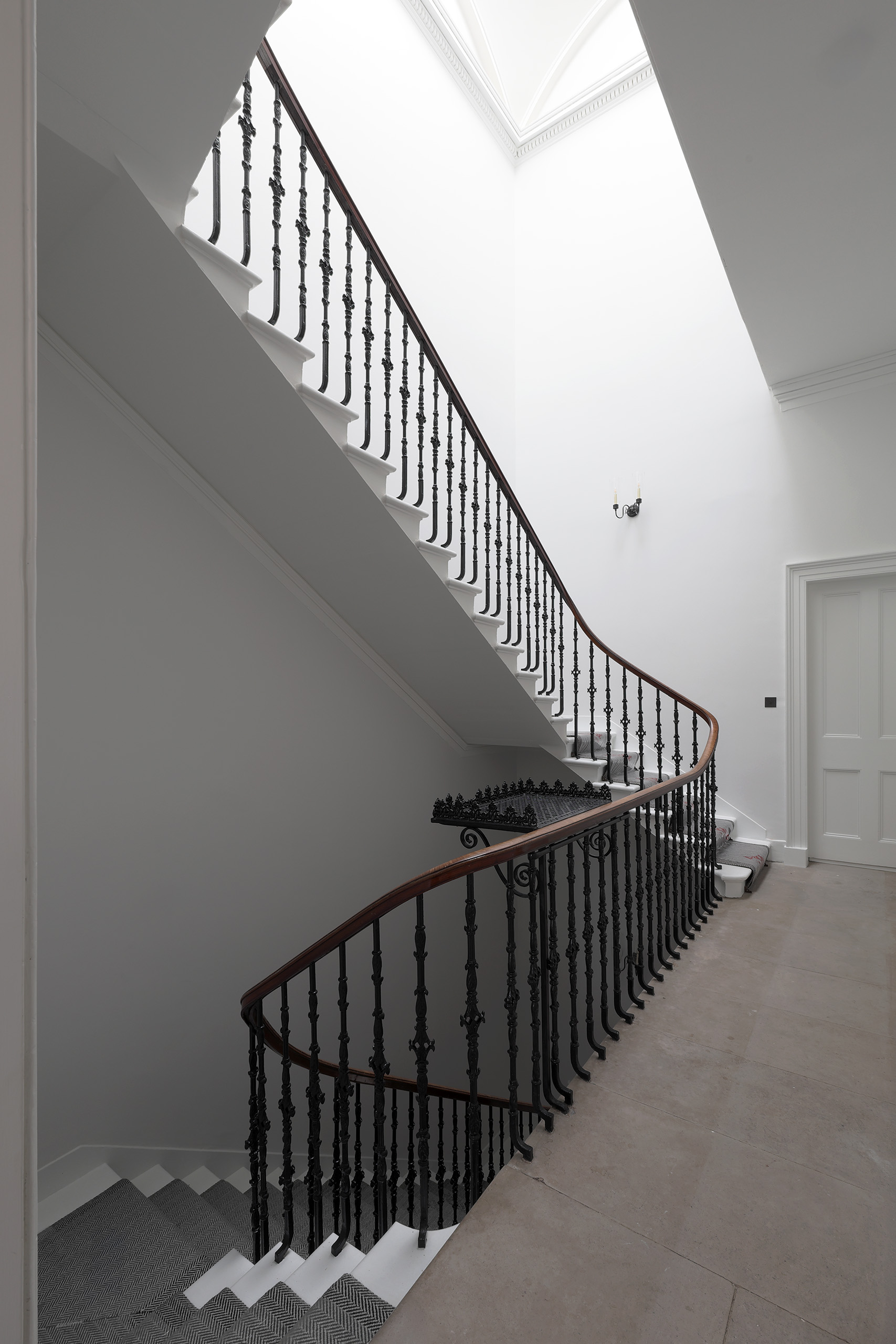





A thoughtful remodelling of a 5-storey, grade ‘A’ listed Georgian townhouse located in Edinburgh’s New Town, a UNESCO World Heritage site. The property was one of the few in the street which has not been subdivided and retained many of its original features.
The main aim of the project was to replan the house to maximise use of the higher status spaces such as the first floor (sometimes referred to as the ‘Piano Nobile’). Room functions were also relocated to give a clearer separation between ‘public’ and ‘private’ zones, and to improve the sequential flow of related spaces (for example relocating doors so are accessed from bedrooms as opposed to the central stair core).
The project was also an opportunity to maintain and repair the outside of the house and restore original features, such as shutters, back to functionality.
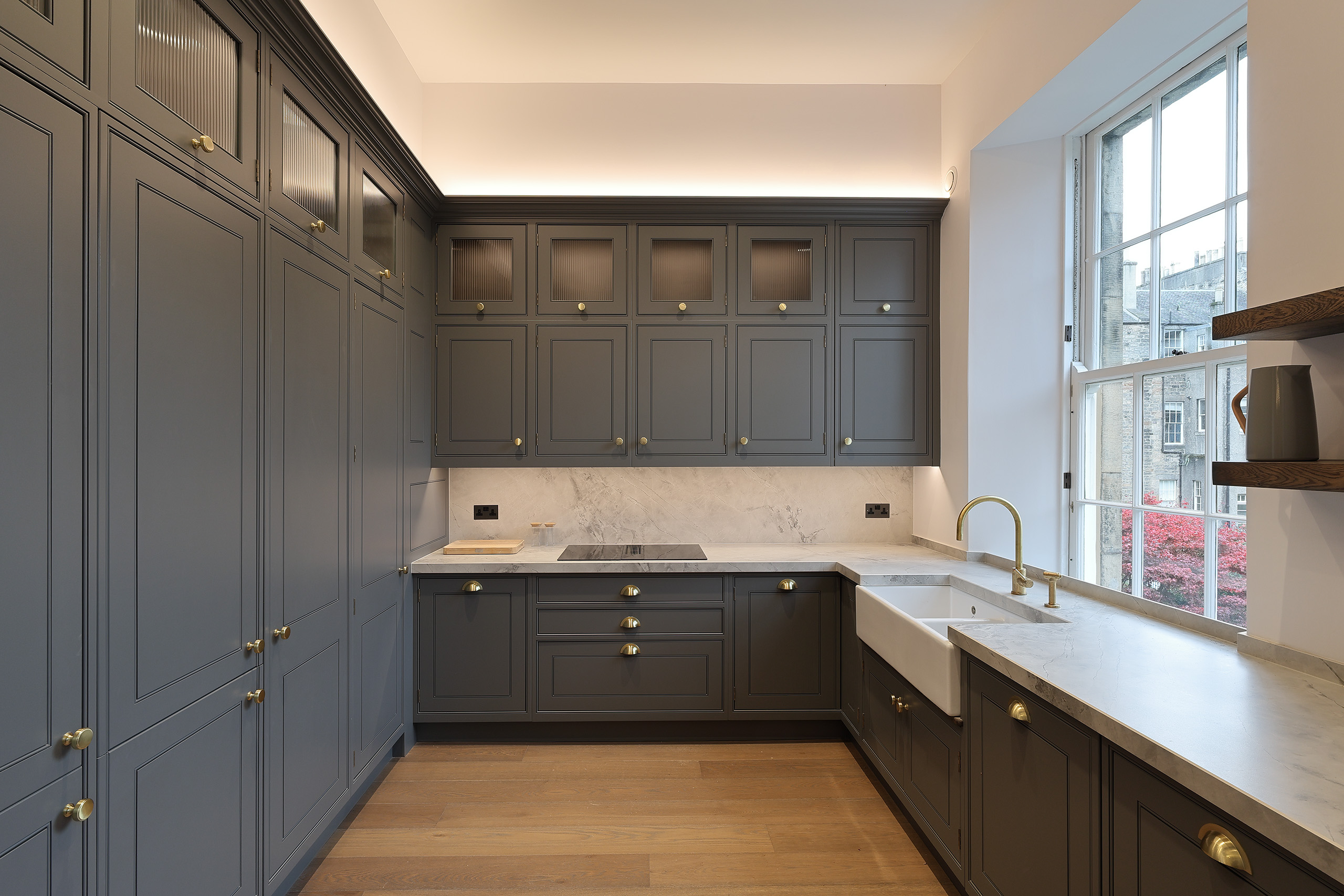
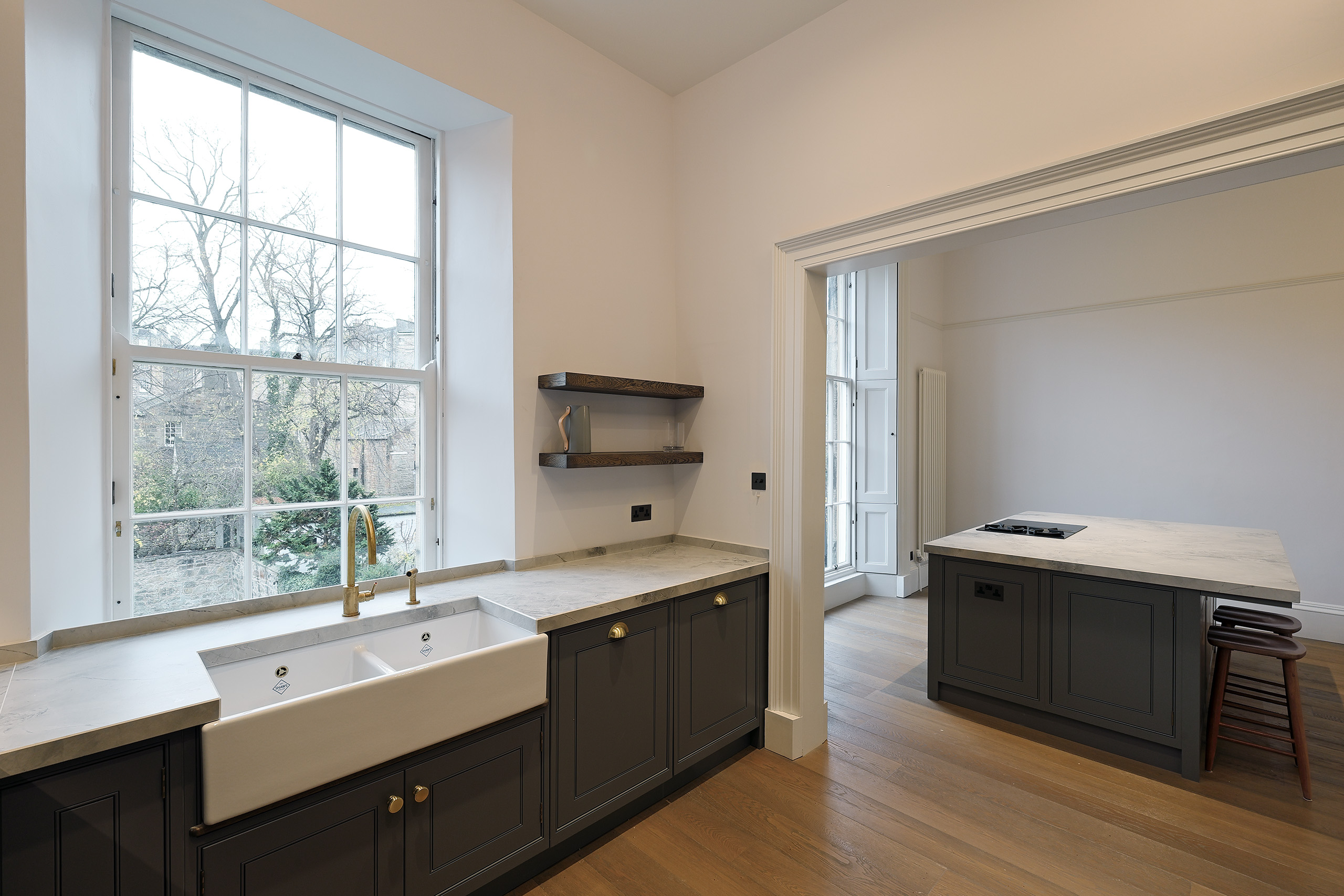
The primary design move was to relocate the main kitchen from its original location in the basement to the rear of the first floor. To accommodate both kitchen and dining functions in this area, a new opening was made between the two rear rooms, carefully proportioned and detailed to respect the original hierarchy of the building. Kitchen cabinetry was custom made by a local company, and extract ducting was routed through the floor to avoid cooker hoods disturbing the historic lath and plaster ceilings.
Following the kitchen relocation, the Master Bedroom suite was moved from the rear of the first floor up to the second, with a new master ensuite created in an adjacent room.
Finally, the lower rear lower ground floor was opened up by removing elements of the central wall and a small kitchenette was added to form a garden-facing entertainment lounge.
Given the age and listed status of the building, great care was taken to ensure that the repairs were carried out using traditional materials and appropriate techniques. Works were agreed with the conservation officer and carried out by skilled local craftsmen.
Externally, spalled stones were repaired and walls repointed. Failed silicone was removed from around windows and replaced with traditional burnt sand mastic. At roof level, missing slates were replaced and failed synthetic gutter linings were removed and replaced with leadwork. Timber sashes were overhauled by replacing rotten sections and cracked glass, and re-planning to enable unhindered motion. Modern paint was stripped from stone steps.
Internally, shutters were freed and repaired to make them functional once more,
Damaged skirtings and architraves were replaced with new lengths cut from Scots pine, Hallway flagstones were stripped of paint and resealed. Metalwork was stripped and repainted, and new sympathetic handrails were designed to replace inappropriate modern additions.
Hatterwan provided a full architectural service for the duration of the project, including obtaining Building Warrant and Listed Building consent, and administering the building contract.
Principal Contractor: Livingstone Construction Ltd
Architect: Hatterwan Architects
Principal Designer: Hatterwan Architects
Quantity Surveyor: Cromarbrooks
Structural Engineer: Form Structural Engineers
M&E Engineer: DKI Consulting Engineers
Kitchen Supplier: Sculleries of Stockbridge